Hardware hack
Maneki Metronome
A fortune cat's waving arm, rewired into a working metronome.
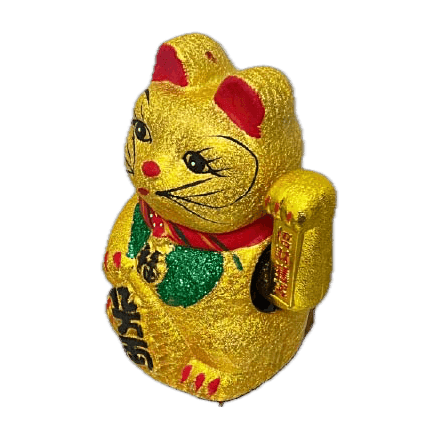
A maneki-neko already waves its arm in a steady rhythm — so I saw a metronome hiding inside a good-luck charm. I gutted a cheap golden lucky cat and turned its wave into a real, controllable beat: a metronome disguised as the thing that's supposed to bring you fortune. It's a readymade move — take a mass-produced object, keep its face, and reassign what it's for — sitting somewhere between Duchamp's readymades and Koons' pop objects.
The idea
What it is, and why I made it
The lucky cat is sold as a wish: put it on the shelf and let luck come to you. Its arm swings on a fixed, decorative loop. I wanted to flip that passivity — “destiny in your own hands” — by making the same gesture do something useful. A musician's most basic tool is a steady beat, and the cat was already beating. So the idea was simple: keep the object and its cultural weight, change what the motion means.
The hack
What I changed
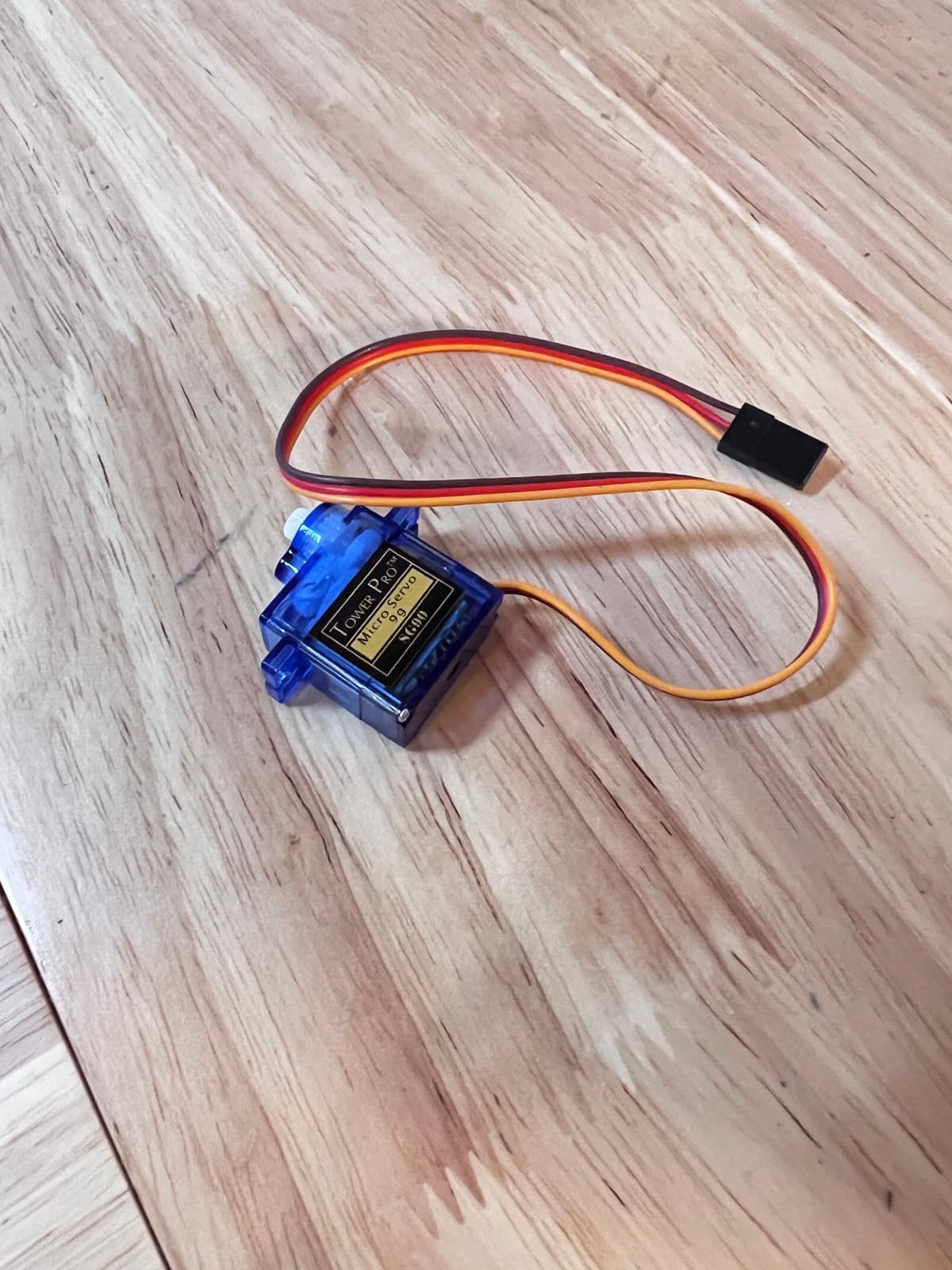
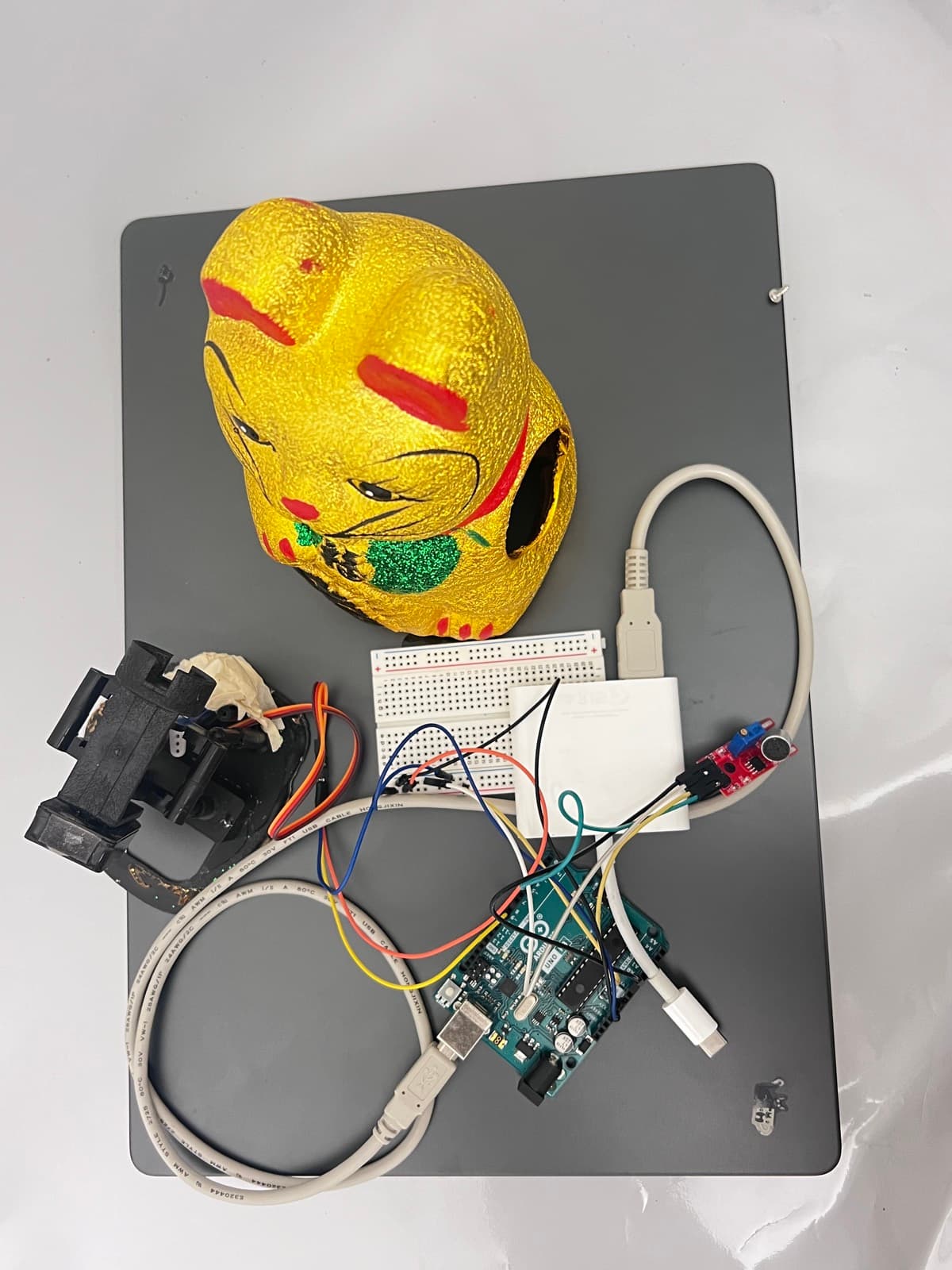
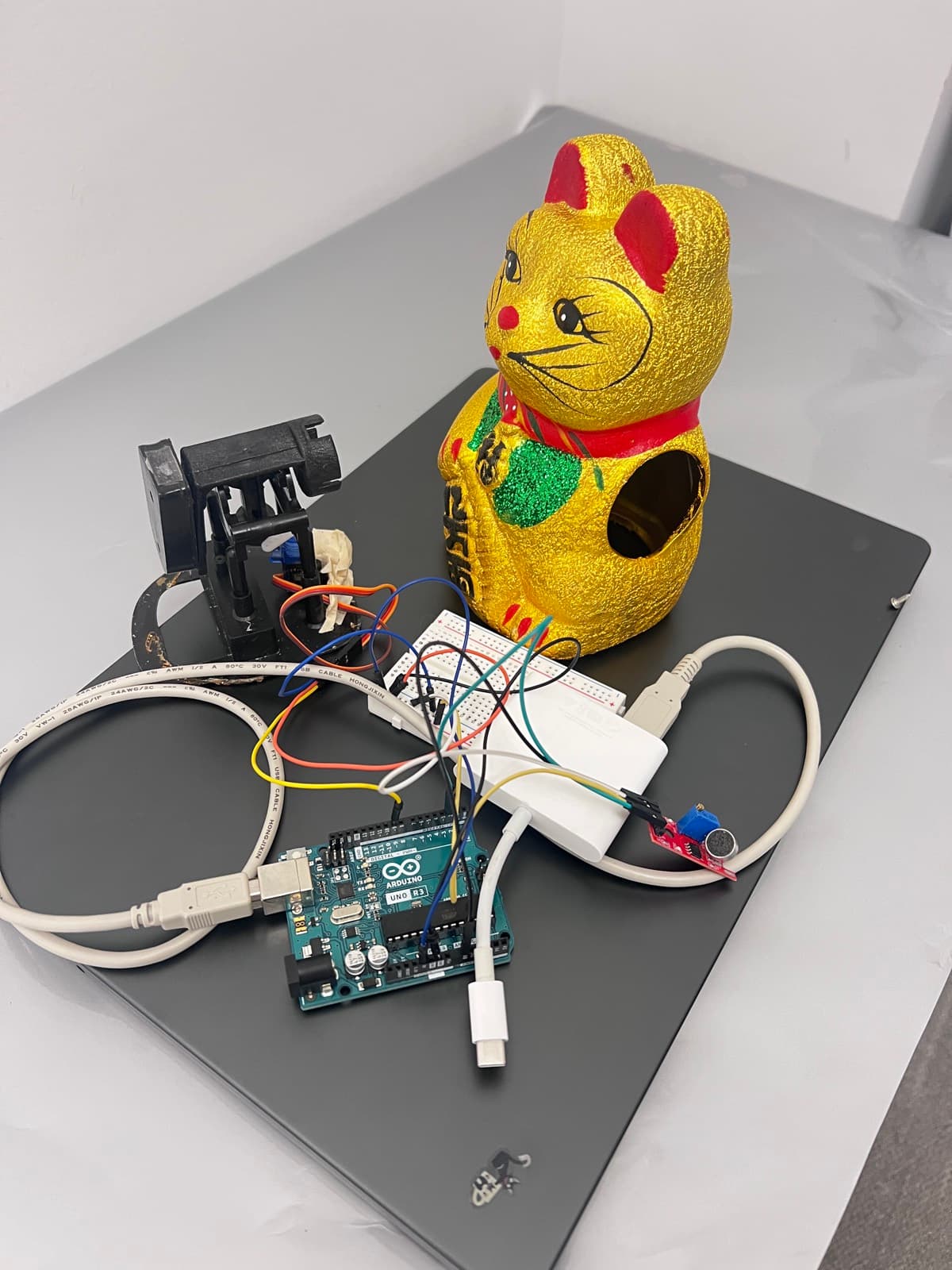
I opened the cat and removed its battery-driven swinging mechanism, then mounted a servo I could actually command inside the arm cavity. Instead of a fixed novelty wobble, the wave becomes a precise, repeatable swing I drive from code. A clap sets it off — the cat starts keeping time for you.
How it's built
Hardware and code
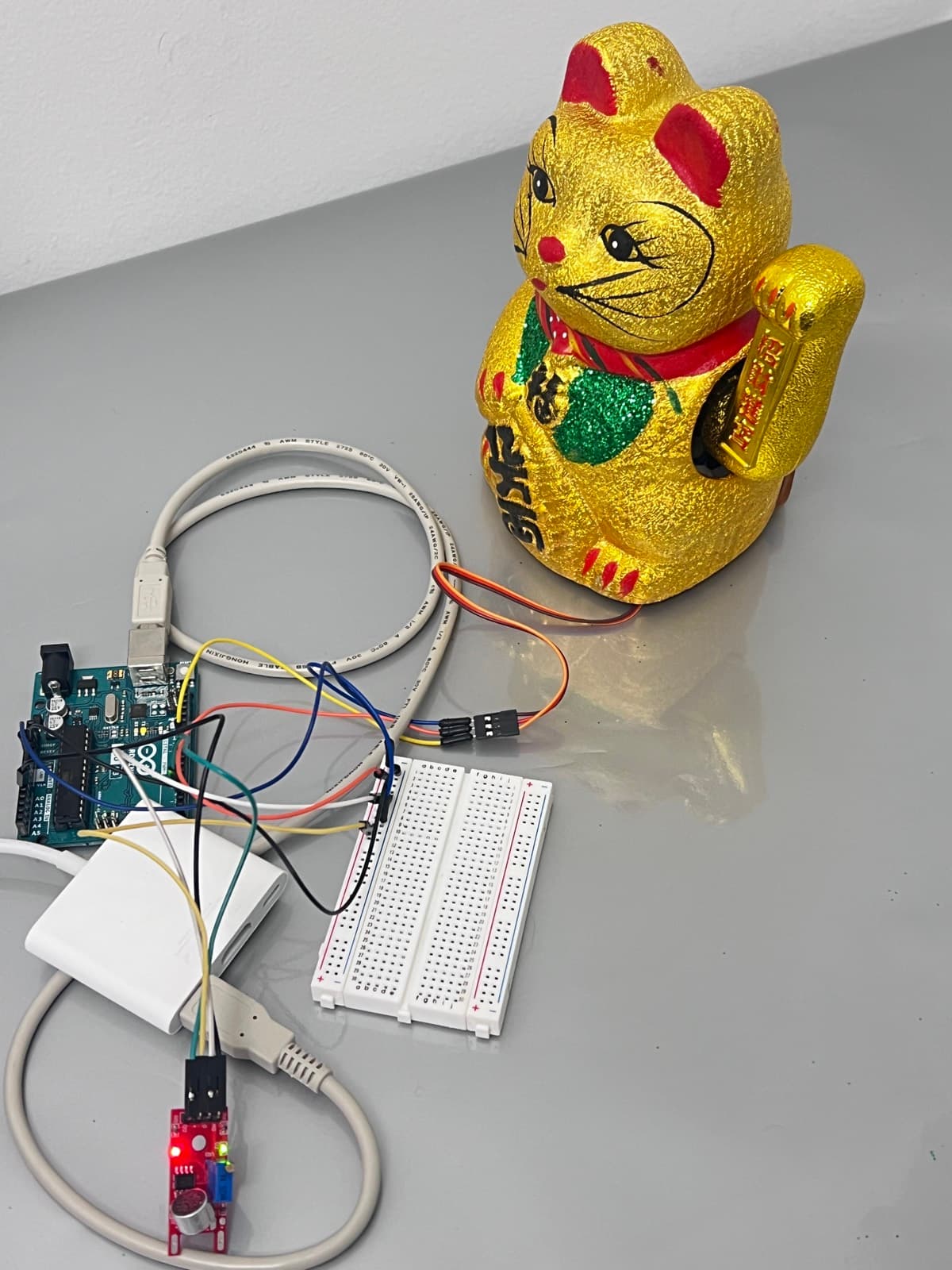
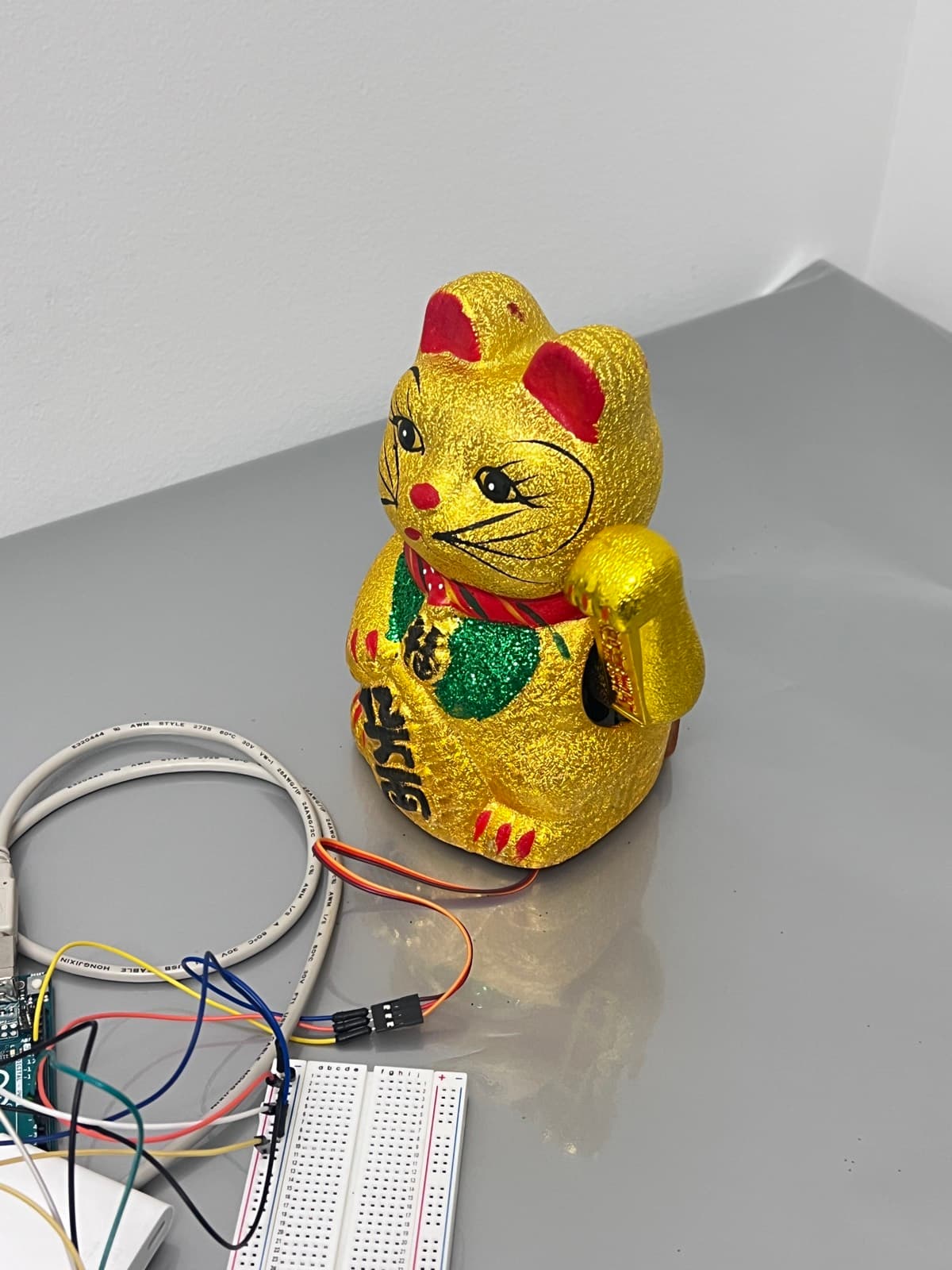
An Arduino Uno on a breadboard drives the servo seated in the cat's arm; a sound sensor listens for a clap to start it. The code turns a chosen tempo into the servo's swing timing, so each wave lands on the beat, and it runs four meters — 1/4, 2/4, 3/4, 4/4 — from a plain unaccented pulse up to a full four-beat bar. A servo has no bell, so it can't accent a downbeat by getting louder; the bar is marked in time instead. The arm holds a beat longer at the top of each bar, and you read the meter off that pause. Everything stayed exposed on the bench during building — cat, wiring, board — and only the mechanism moved back inside the shell for the final object.