Product Design · Emotional Wearable
Pebbi
Role
Sole designer and researcher on an MDes thesis — field research, industrial design, hardware prototyping, and the companion app.
Duration
2024
Type
UC Berkeley · MDes Thesis
Skills
Interaction Design, Emotional Design, UI Design, User Research
Tools
Figma, Blender, Arduino
Emotional support you do not have to ask for
01/Overview
How do you design for living with cancer, not just surviving it?
Pebbi is an emotional support wearable and companion app — my Master of Design thesis at UC Berkeley, and the recipient of the Berkeley Outstanding Graduate Design Award. It started as “an emotional support device for cancer patients” and ended somewhere harder and more honest: patients do not lack care, they lack a way to be understood without having to explain themselves.
02/Problem
What patients will not say out loud
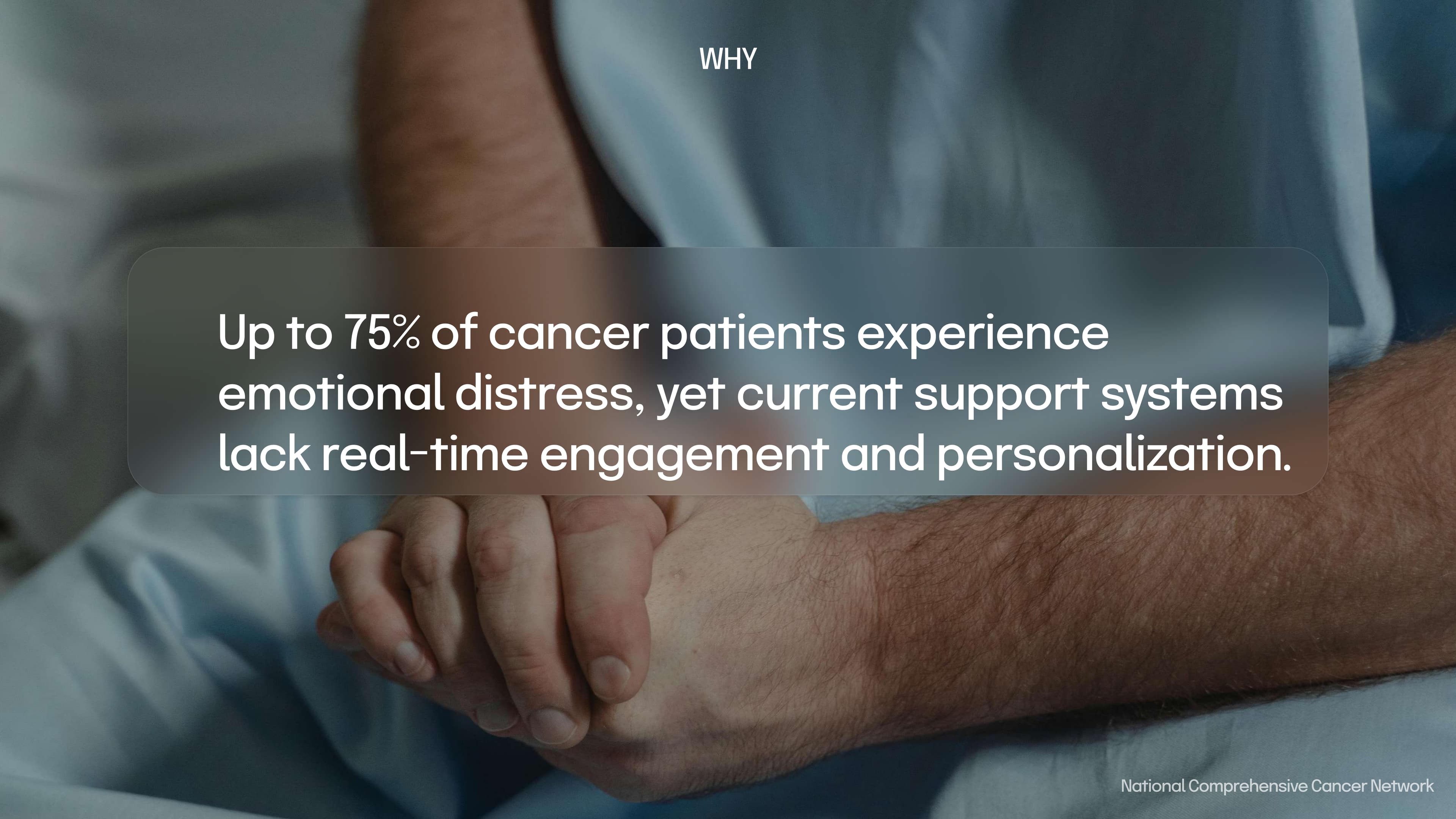
Up to 75% of cancer patients experience emotional distress, but the emotional part of care is treated as a side effect of treatment rather than part of it. In interviews, the pattern that kept surfacing was not an absence of care. It was everything patients felt and never said — to their doctors, and often to their families.
“Her mood would swing after chemo, from the hormones. You cannot treat that as a bad temper. And losing her hair, changing how she dressed, those small things hurt her. She would never tell the doctor. Only us, slowly.”
Vidit, caring for his mother
“She did not want to be a burden. As her body weakened she lost her independence, and with it, some of her self-respect. The family stayed optimistic, but nobody taught us how to actually care for her.”
Kanchan, family caregiver
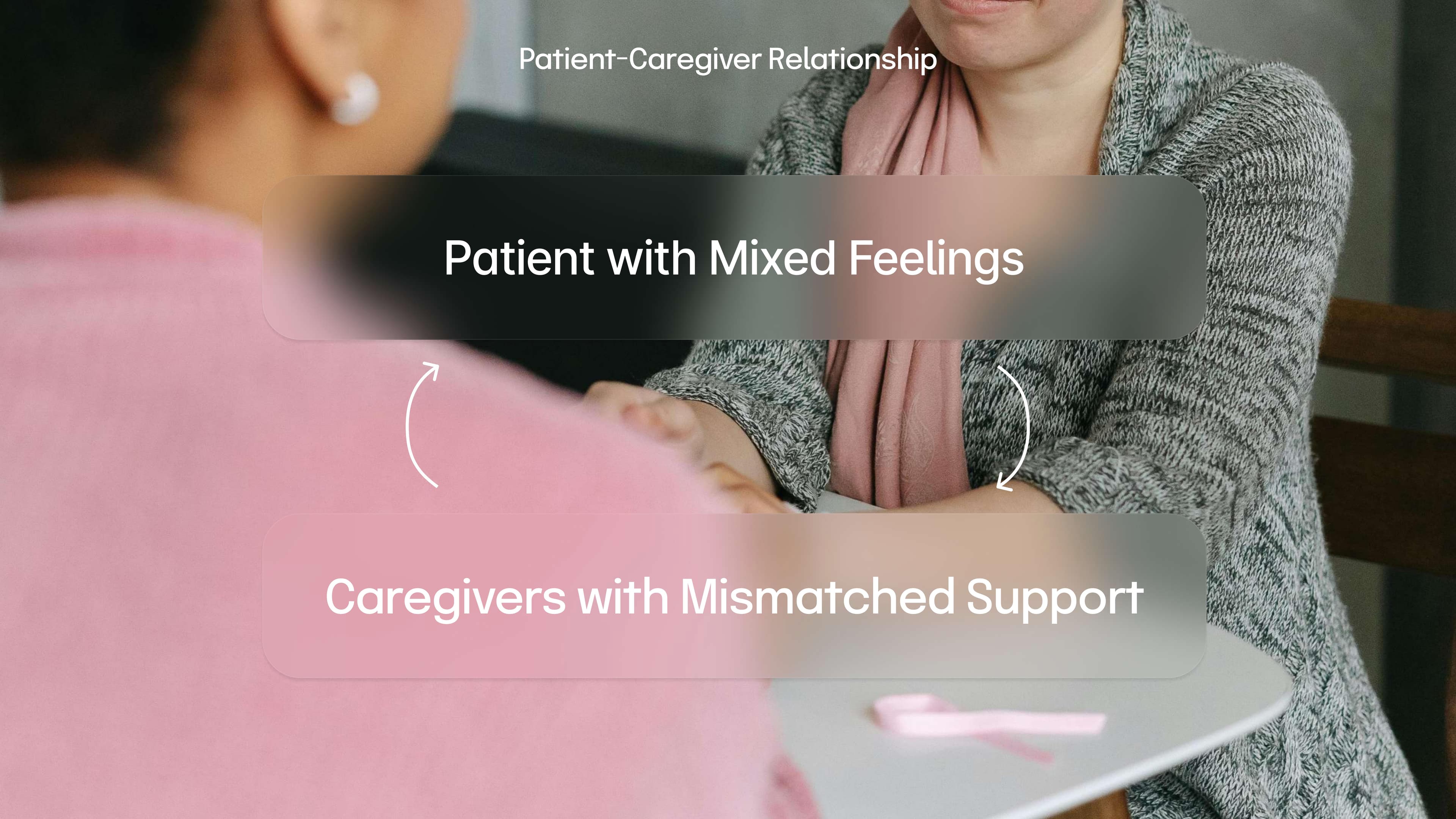
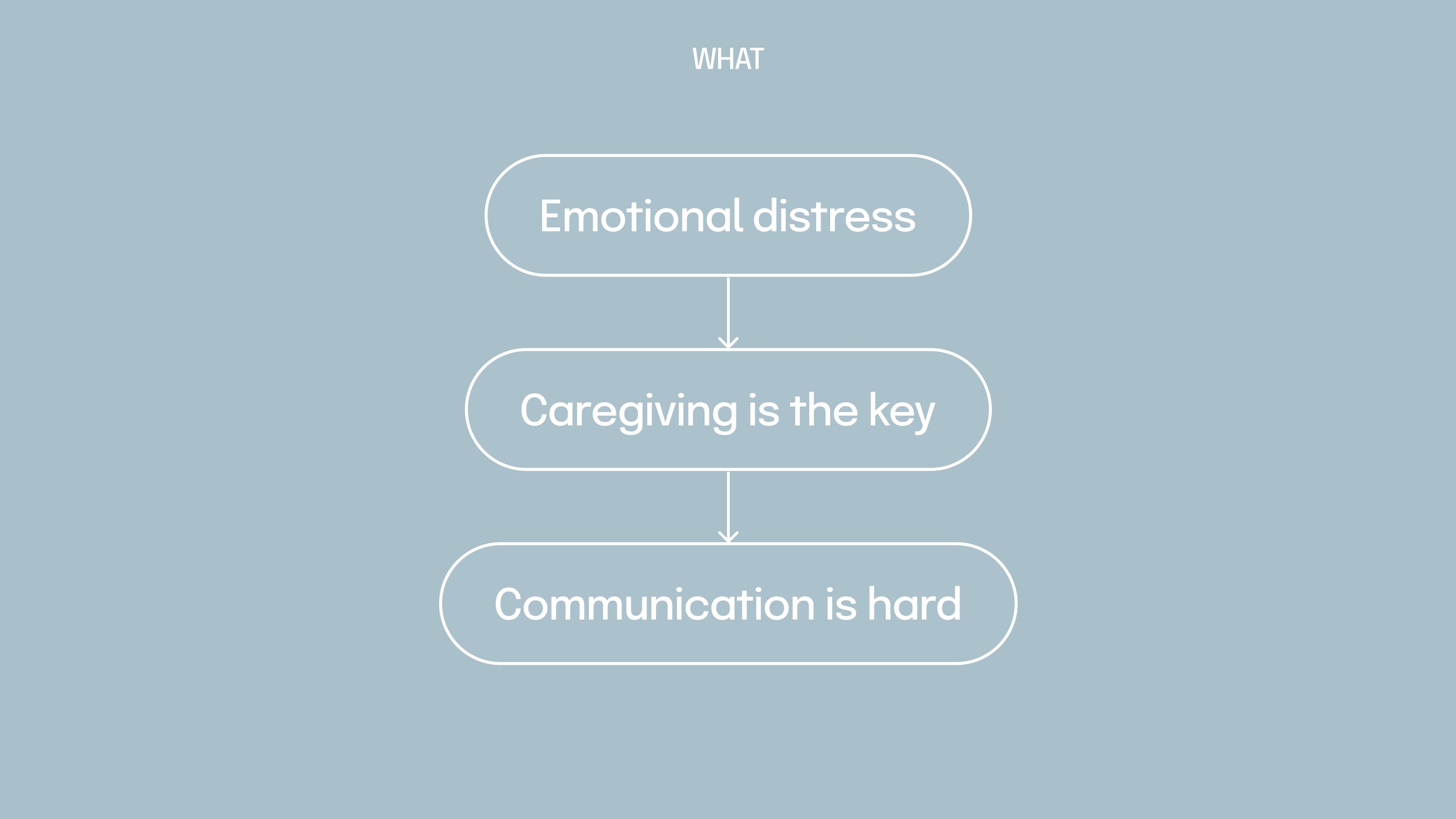
The gap is not care itself — it is the channel between what a patient feels and what a caregiver can see.
03/Opportunity
Emotional visibility as core care, not an add-on
Three shifts moved the thesis off its original premise, and each one opened a design space that another mood-tracking app could not reach.
Patients need help.
Patients struggle to express that they need help. The opportunity is letting someone be understood without having to explain, ask, or appear vulnerable.
Caregivers provide support.
Caregivers need support too. The design serves the emotional channel between patient and caregiver — it does not replace people, it helps them reach each other.
Emotion is a side effect of treatment.
Emotional support is core care. Not an add-on service, but part of what complete cancer care means.
Expression without words
Gesture and pressure replace typing, so a feeling can be logged during a procedure or a family dinner.
Continuous, not crisis-only
Support lives on the body in daily life, instead of inside an app that has to be opened first.
A two-person channel
Patterns reach a caregiver on the patient's terms, so being understood never costs them privacy.
The central insight
Cancer patients do not only need emotional support during moments of crisis. They need continuous, low-friction ways to feel understood, accompanied, and emotionally visible in everyday life. By transforming emotional expression from a verbal burden into a subtle, embodied interaction, Pebbi reframes cancer care from survival-centered treatment toward living with confidence, dignity, and connection.
04/Solution
Pebbi, and a connection channel called Pebbling
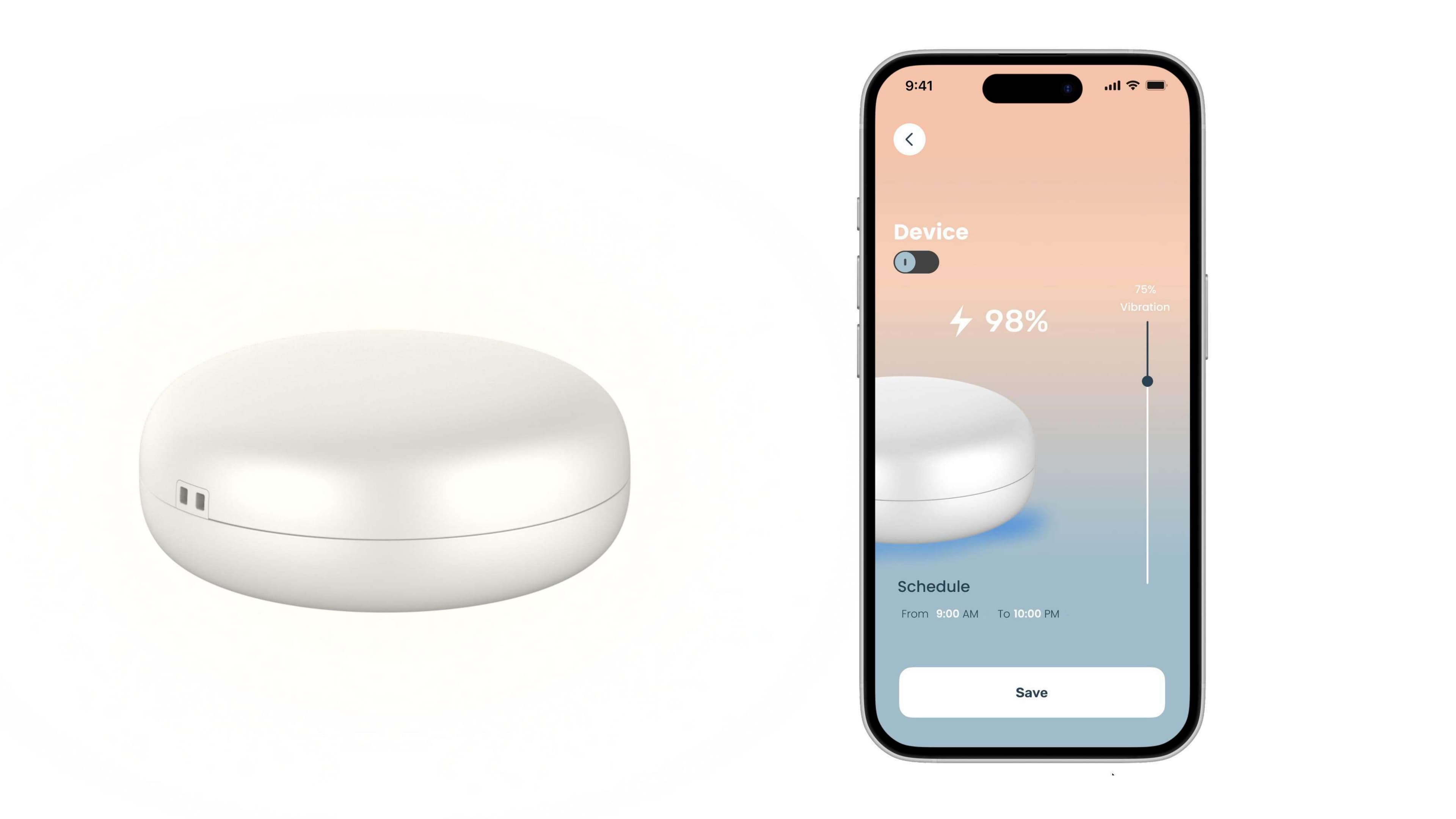
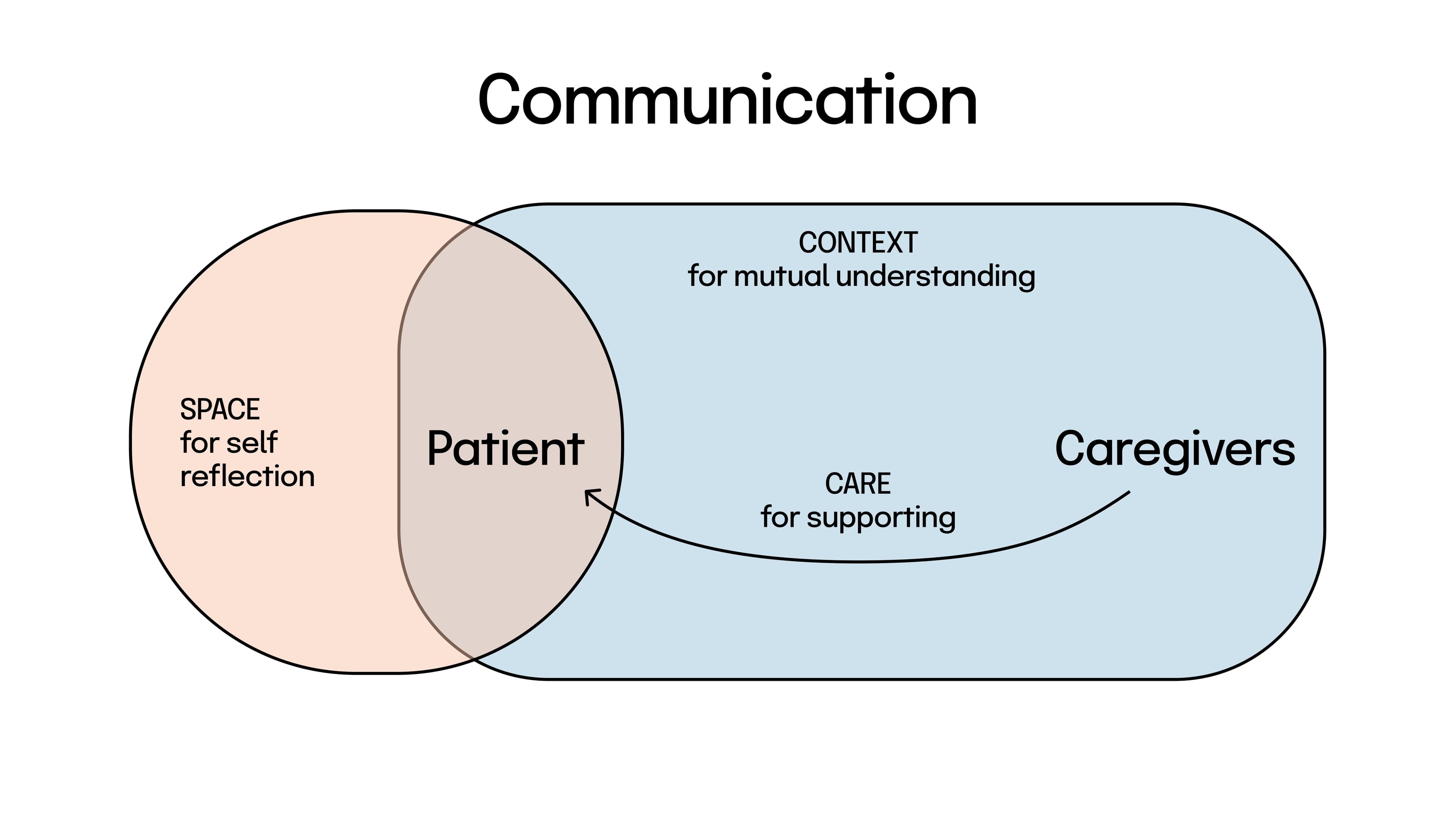
Pebbi is a palm-sized silicone device worn as a necklace or a pin, paired with a companion app. The device carries the expression: gesture and pressure log how someone feels, without words. The app carries the relationship: Pebbling is an invitation-only channel where a patient can send a tactile note to family, and where a caregiver sees emotional patterns the patient chooses to share.
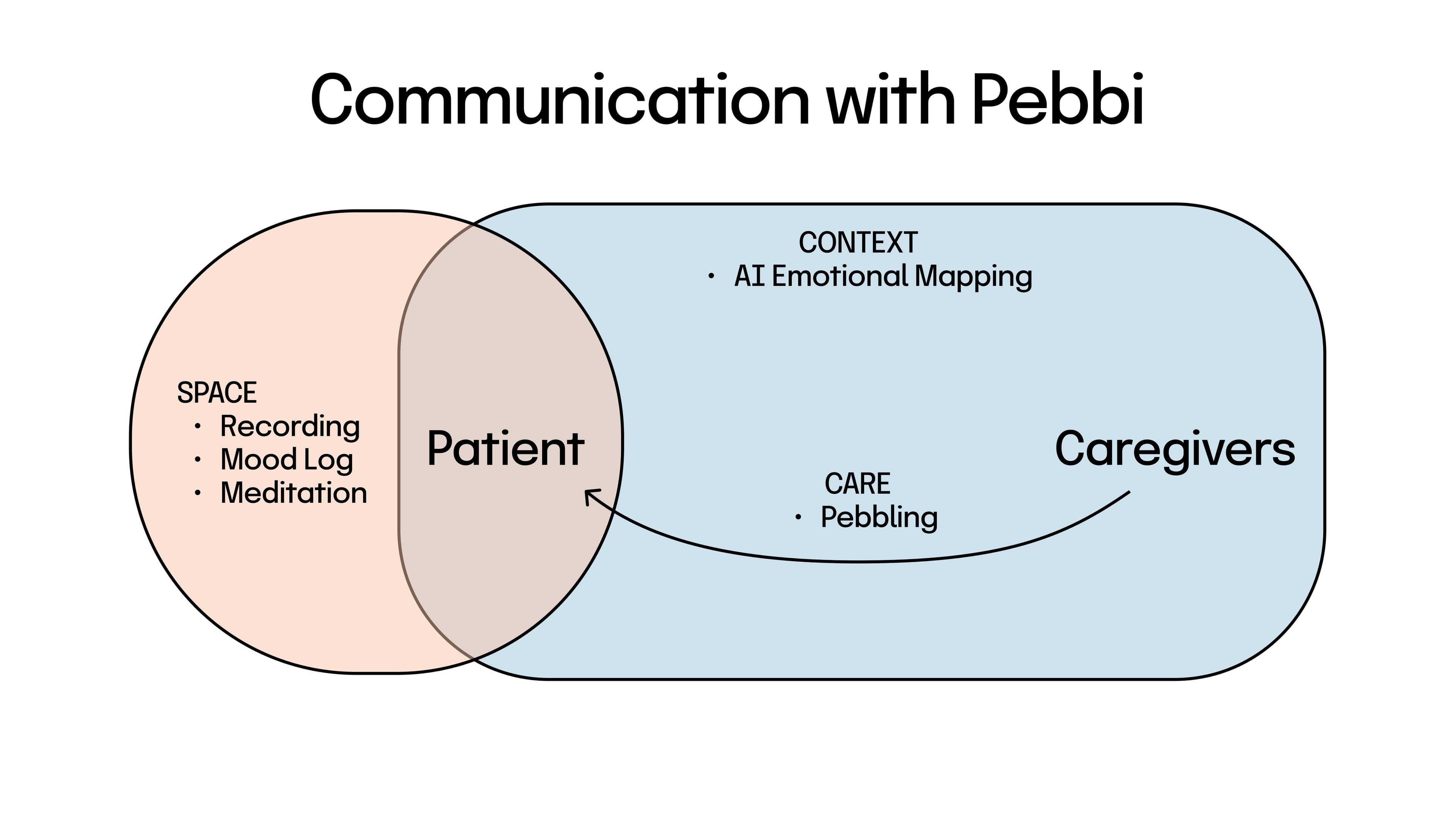
Space for the patient, context for mutual understanding, care from the people around them.
05/Core Flows
Six moments the product is built around
Flow 01
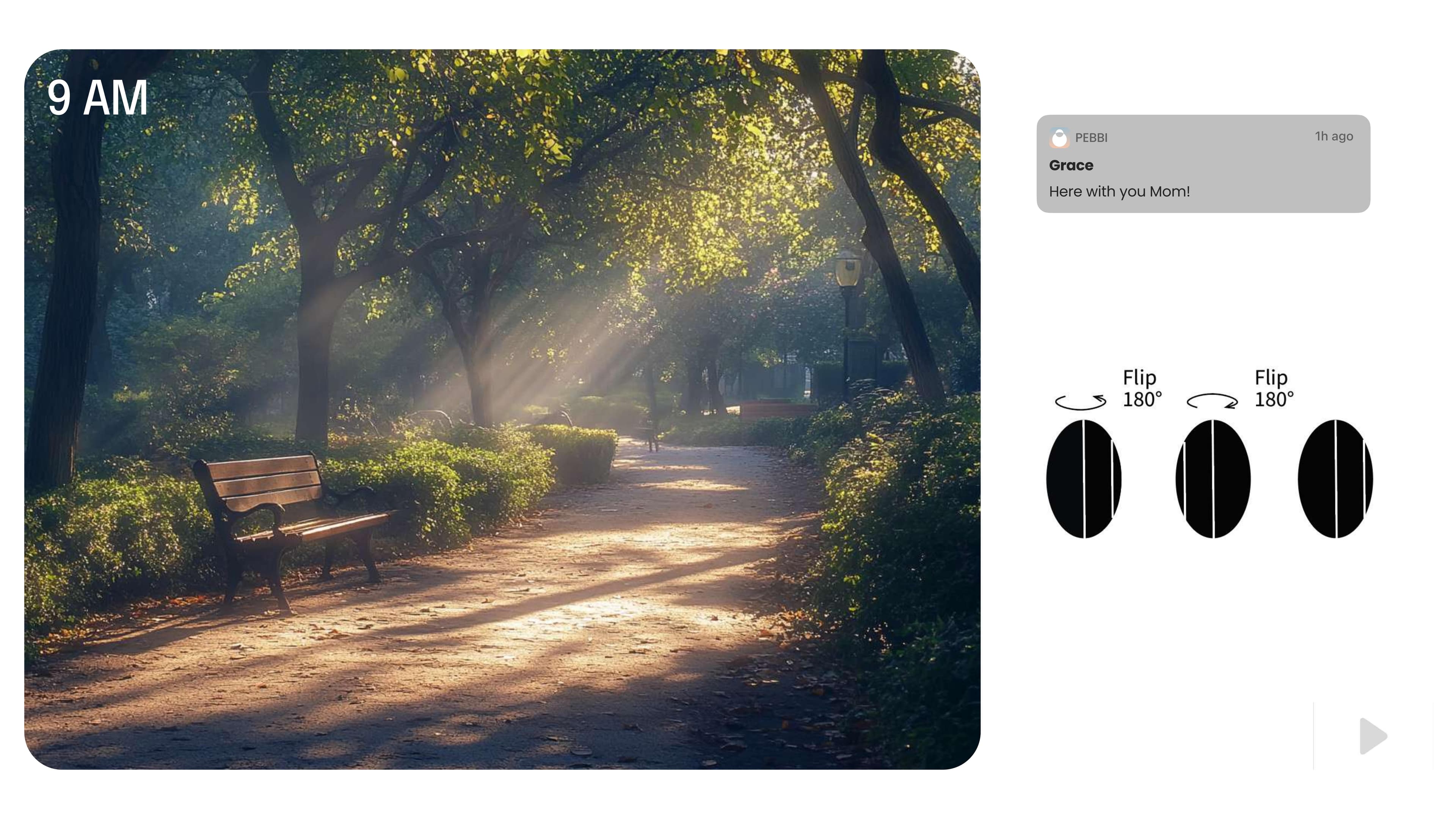
Flip to begin, without opening anything
A patient flips the device to start logging, rotates to stop, shakes to redo. One pulse marks a location, two an activity, three an emotional state. Nothing has to be unlocked, typed, or named.
Flow 02
Squeeze to say how much
A force-sensitive point at the center of the device turns the strength of a squeeze into the intensity of a feeling. It is the quietest input in the system — discreet enough for a medical procedure or a moment where speaking up is not an option.
Flow 03
Send a pebble
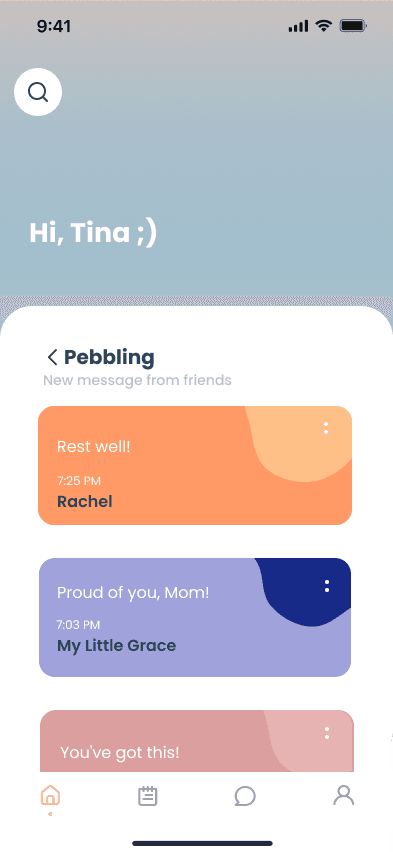
A patient can send a felt note to an invitation-only circle of family and friends. The point is not the message, it is a presence someone can feel — the direct answer to the isolation patients described most often.
Flow 04
Receive one back
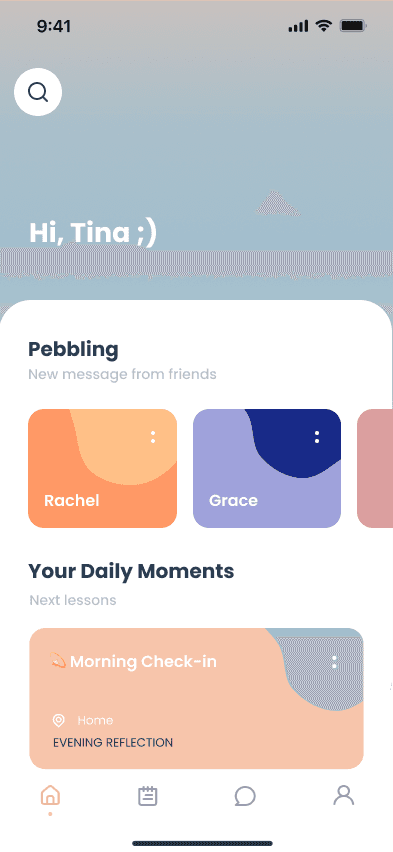
Incoming pebbles land on the home screen as warmth rather than another notification. A caregiver who does not know what to say can still say something.
Flow 05
See the shape of a week
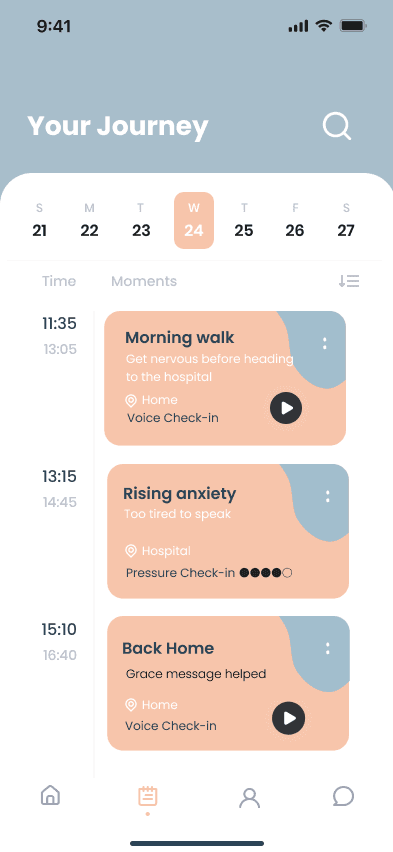
Your Journey turns touch-logged check-ins into a timeline. Patterns become visible to the patient first, and are shared onward only if they choose to.
Flow 06
Rest and reset on treatment days
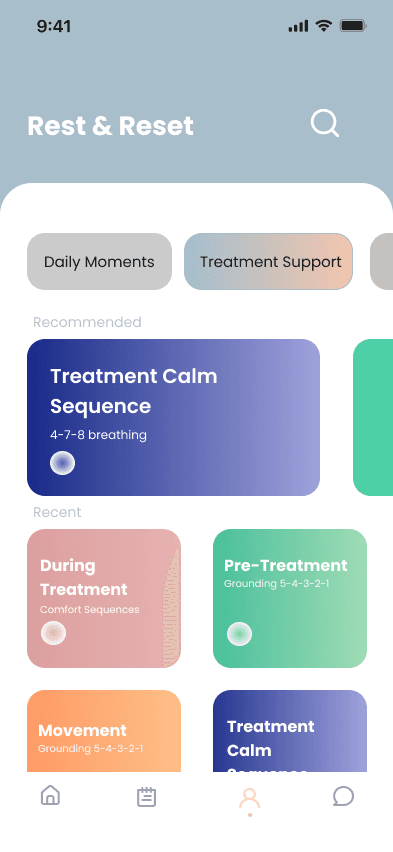
Short calming sequences are built for the hours around chemotherapy, when the emotional load is highest and the capacity to seek help is lowest.
06/Research
Where the evidence came from
Field work at a cancer hospital in the summer of 2024, six in-depth interviews with patients and caregivers, and a survey of 31 participants. I mapped the cancer journey against clinical research including BC Cancer's journey-mapping report, which backed what the interviews showed: social and emotional support is an integral part of the cancer journey, not a nice-to-have. Patients asked for a whole-person approach, not just treatment of the body.
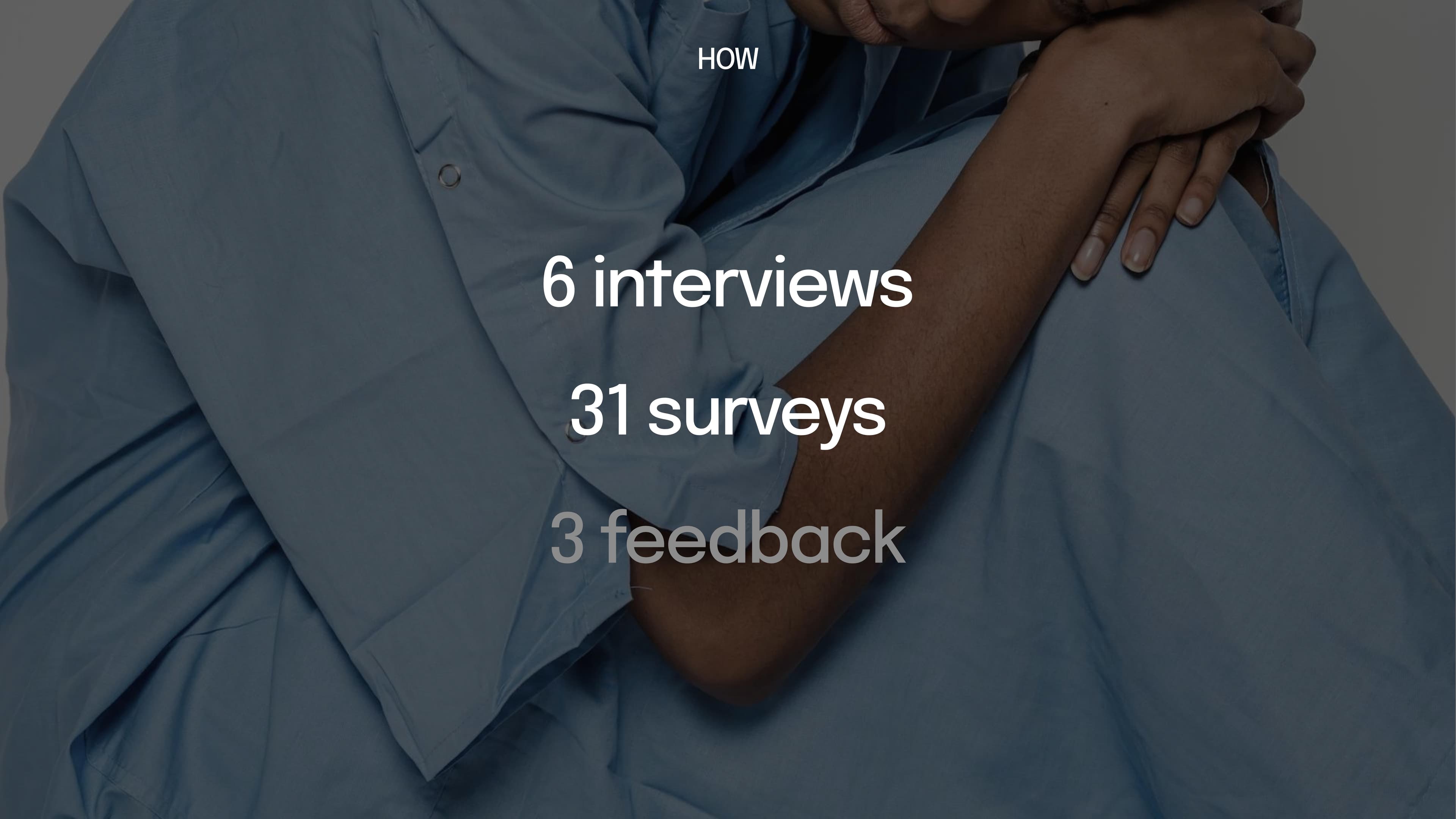
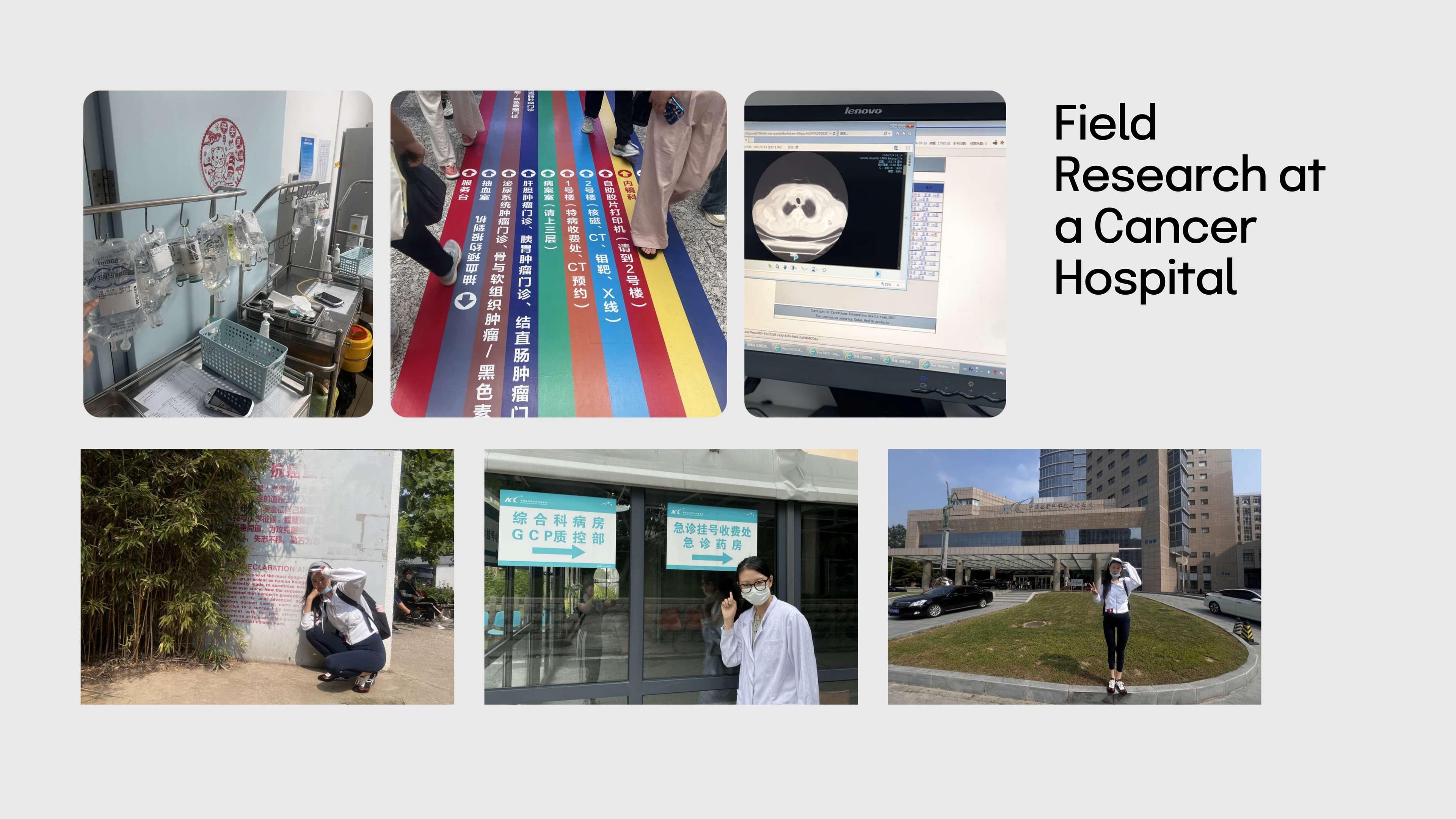
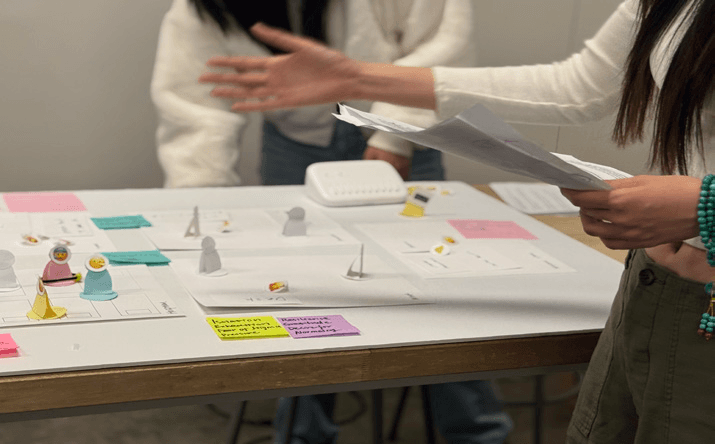
Field research at the hospital, and a Business Origami session used to map who touches a patient's day.
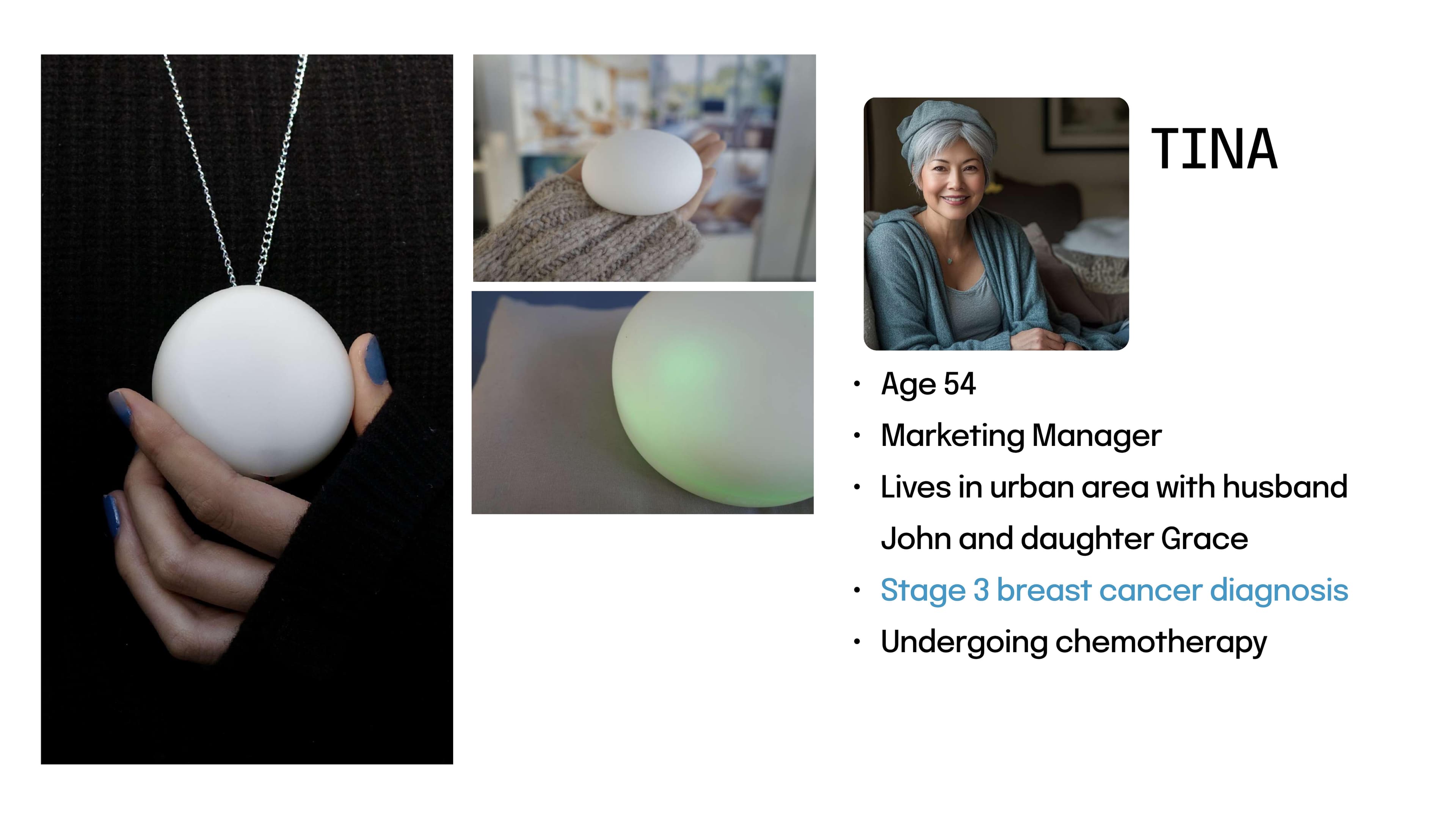
The research condensed into Tina: 54, undergoing chemotherapy, living with her husband John and daughter Grace.
07/Exploring Form Factors
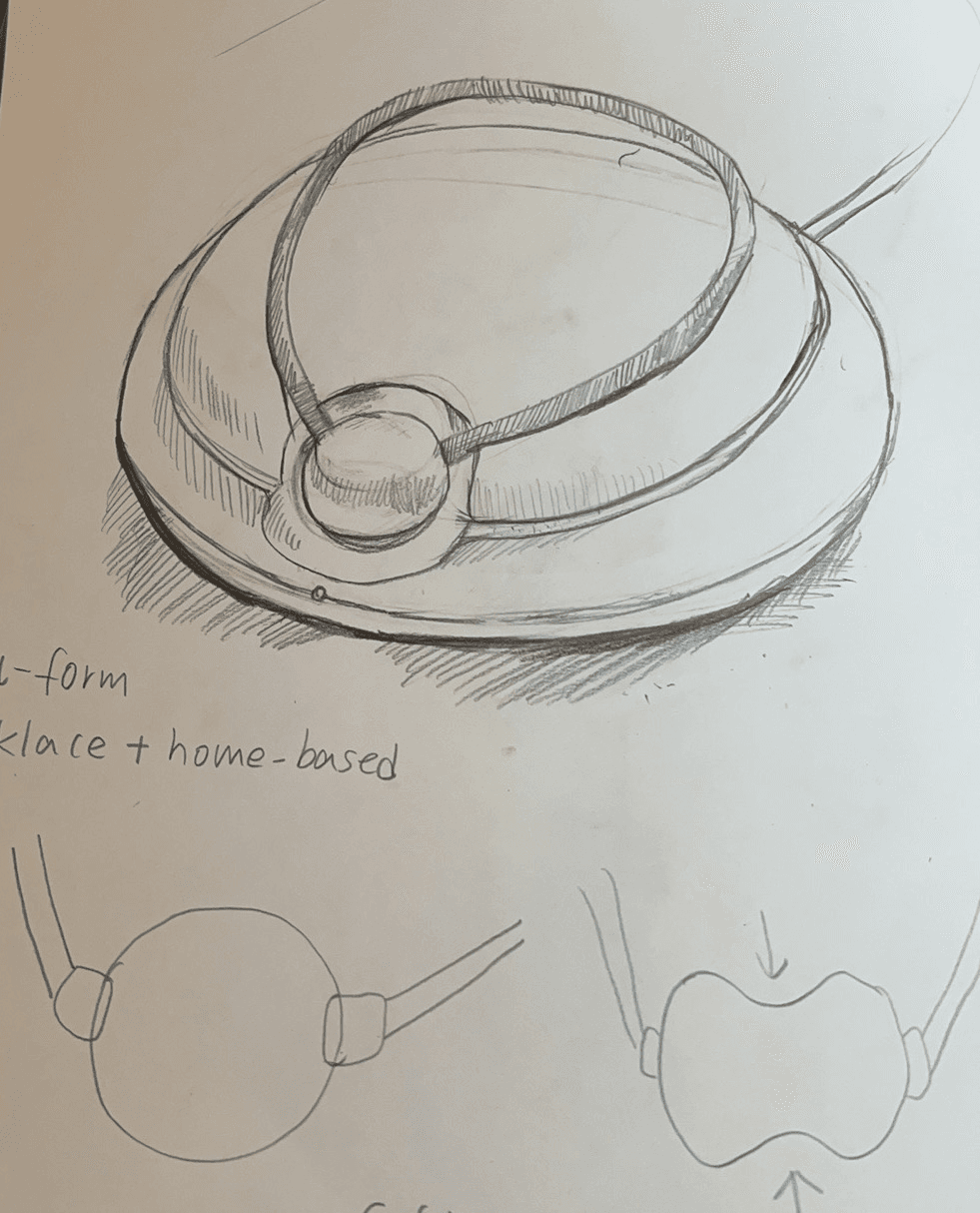
Necklace, pin, or something that stays home
Three directions were tested against one question: which form lets a patient use it without being seen using it? The necklace won on discretion and was what most testers reached for. The pin earned its place during medical procedures, where a necklace gets in the way. A home-based object was explored and set aside, because it could not follow a patient into the moments that mattered most. I kept both wearable forms.
08/Prototyping and Testing
Three rounds, from silicone casts to wired electronics
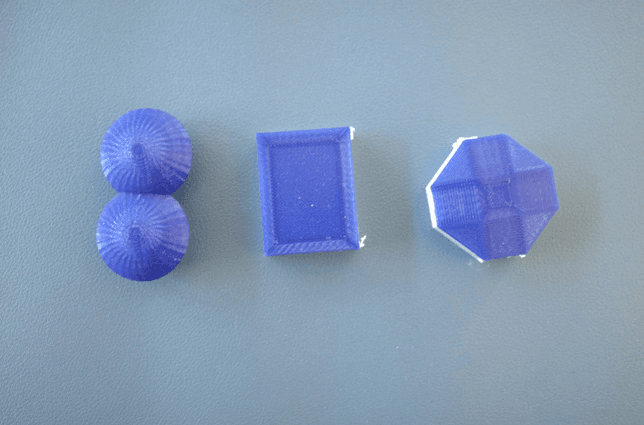
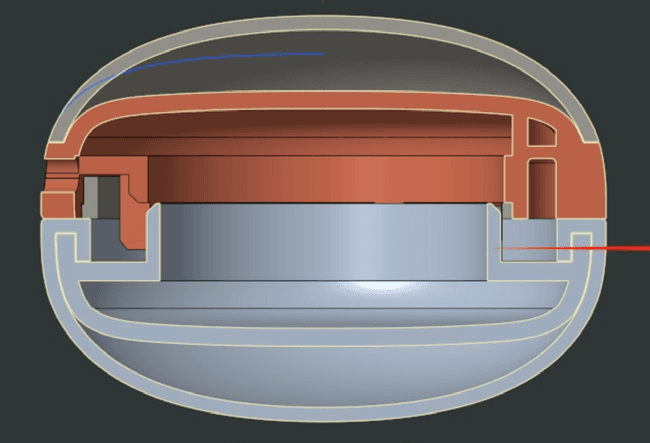
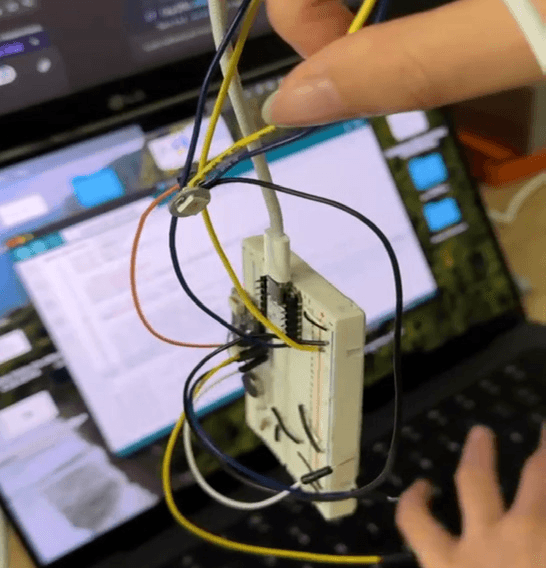
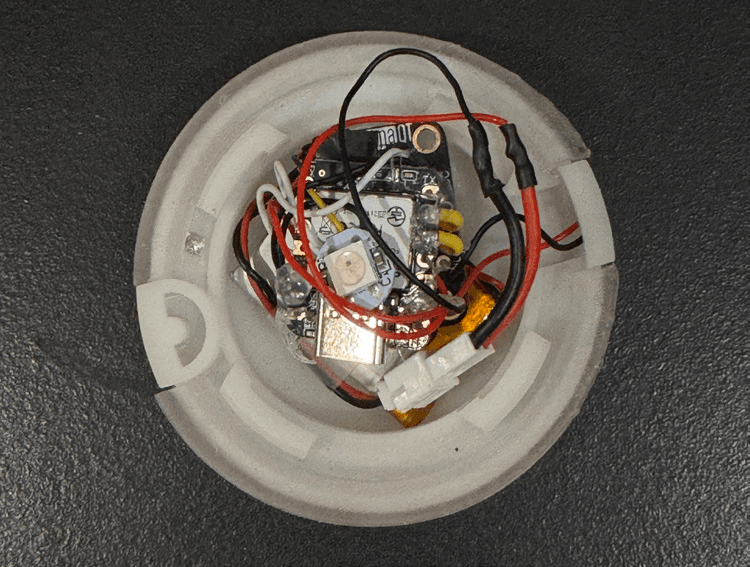
I sketched forms, 3D-printed and cast silicone test shapes, and wired the electronics by hand — starting on a breadboard with an Arduino and a haptic driver before packing everything into a printed shell. In a two-week wear test with eight participants, people recognized the vibration patterns almost every time and rated comfort highly, which told me the tactile language was doing its job.
09/Design Decisions
Why a wearable, and not another app
Every major decision traces back to the insight. Expression had to be possible without words, so the interaction is embodied and tactile rather than typed. Support had to be continuous and low-burden, so it lives on the body in daily life, not inside an app that asks to be opened. And because the real channel is patient and caregiver, sharing stays under the patient's control — the app reads emotional patterns over time and surfaces them gently, never automatically.
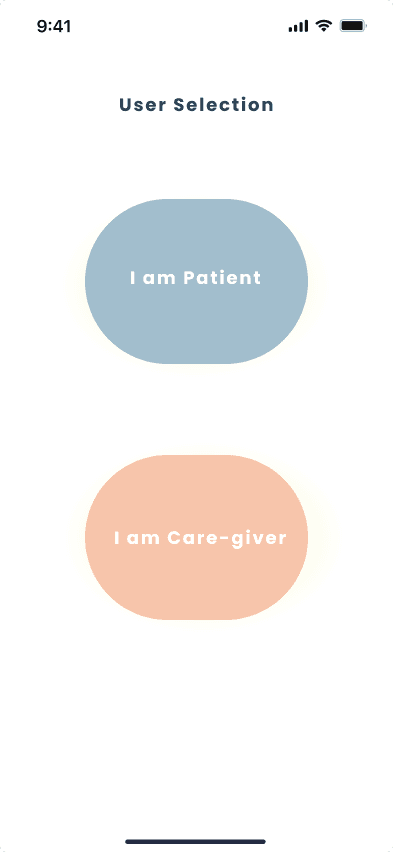
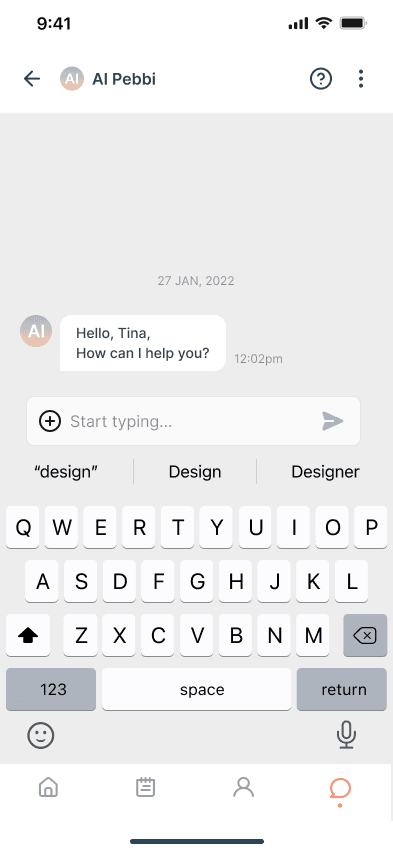
Patient and caregiver enter through different doors, and the app never speaks for the patient.
10/Designing for Hardware Constraints
What the body and the battery allow
A device meant to be worn all day, on skin that is already sensitive from treatment, sets hard limits. The final build used medical-grade silicone with an IPX5 rating and around three days of battery, so charging never becomes one more thing to remember. The haptic vocabulary was deliberately kept small — one, two, and three pulses — because a pattern set only counts if a tired person can tell them apart, which is exactly what the two-week wear test was there to check.
11/Reflection
Where it landed
Pebbi received the Berkeley Outstanding Graduate Design Award. But the result I care about is the reframe itself: treating emotional visibility as core care, designed into daily life rather than reserved for moments of crisis.